About Dickon
Read here about my ethical stance, a bit about my other interests, and other areas of study besides medicine and psychiatry, my own lived experience, my professional qualifications, awards, and consultant posts, and a list of my publications.
Ethics and Values
We are in dark times, when the very notion of almost any kind of ‘common good’ is increasingly fraught with anxiety, possibilities for conflict, and often automatic mistrust.
Mistrust is an entirely logical stance if one’s prior experience of help and expertise has been one of neglect, exploitation and disappointment (as has unfortunately been the case for too many of my patients.) However, when any stance becomes fixed and insensitive to its context, it ceases to be alive; that dynamic ‘holding of balance’ in the noise of what life throws at us. Instead, fixity closes the door to the possibility of fruitful change, making conflict and loss all the more likely. As a self-appointed ‘helper’ (albeit with qualifications to support me in that role) I must expect a degree of mistrust and bring thoughtfulness to this shared dilemma. All change involves loss as well as gain and is therefore always a more or less risky pursuit,. So those in the business of claiming they might help others in considering and implementing change have an absolute duty to be transparent about the ground they work from; to allow that scrutiny.
Conversely, there are abundant examples of the corrosive effect of mistrust’s opposite; credulity. There’s a hackneyed phrase that still speaks to me: “If you stand for nothing, you will fall for anything.” This piece of writing is an attempt to sketch what I stand for.
My professional practice - as much as possible together with the rest of my life - cannot be understood as something separate from my ethical stance, so those I offer to help have a right to understand it. That said, it is very hard to broadcast one’s ethical stance without sounding po-faced, pompous, and humourless. Conversely, to assume my ethics are obvious to and accepted by everyone I meet, would be arrogant and wrong.
I like the title of Shakespeare’s play, “A Comedy of Errors”, rather more than I like that particular play of his. That phrase is really a description of all human relationships; we humans can be understood as kinds of ‘misunderstanding machines’, and I believe it is only when we can share in the comedy of that fact - sharing laughter as we come to understand our misunderstandings together - that we come to feel less alone. I believe that we discover ourselves not through introspection (though I am not against introspection) but in the reflections of ourselves that we discover in trusted other minds.
As a white man with the additional unearned privileges of education and unfailing family support through my life, I understand this good fortune carries with it an absolute duty to use what voice and influence I have to press as hard as I can against the oppression of those whose voices are less attended to. Whether I ever achieve this is for others to judge, but for the sake of clarity I stand squarely against racism and against any other behaviours that involve the othering, exploitation, discrimination against, or dehumanising of any neighbour. We are all neighbours. I think it is the duty of all of us to take responsibility for our almost boundless ignorance of one another’s lives, to try to learn respectfully, and to keep challenging our unsafe certainties.
I particularly like the field of mentalizing (see the accompanying video where I try to explain this word) because it speaks so powerfully of our common shared failings (no single human mentalizes infallibly) and of the anarchic reality that trust (specifically “epistemic trust” - see video) is never conferred by status, power, or qualifications, but by something more essentially human, place-based, and relational. Trust of this kind can only be earned; starting with actions that enable the other person to experience themself as compassionately understood (though of course there is ample evidence in the world that even such achievements are too frequently misused, wherein lies the value of ‘epistemic vigilance’.)
The essentially relational and contextually-rooted nature of mentalizing presents a major challenge to our research colleagues who seek to devise measures of ‘effective mentalizing’. These cannot be a simple set of behaviours to be marked as ‘seen’ or ‘not-seen’ in the experimental subject alone, as the true measure rests mostly in the experience of the other; do they experience themselves as understood in a way that honours their story, their past and present suffering, their hopes and fears? This is a welcome reversal of many of the power-based narratives of expertise, but one which by the same token does not disrespect or deny the existence of expertise. This understanding lies at the heart of all of my work and personal practice, and it is this universal and ethical stance that underpins AMBIT: treating all minds - one’s own, one’s client/patient’s, other professionals’, and informal contacts’ - with an equity of seriousness; because above all Mentalizing and Epistemic Trust are functions of networks, and markers of social capital .
About Mentalizing
About Epistemic Trust
Other interests
This website is principally for my work, though there is a small section for those who care to look where I will share a bit of poetry and photography (lifelong passions) or occasional musings.
Other than this, I am a maker and fixer of stuff. I made a violin some years back, and over several years fixed up an extremely rusty and rotten 70ft narrowboat, Pavane, which I lived aboard for five years - moored out in the wetlands of East Anglia alongside grebes, coots, and the odd otter. I have a passion for nature and the wildest of places, especially the West Highlands of Scotland which I return to year on year. In earlier years I was a passionate mountaineer and rock climber - the passion is undimmed, but the slopes explored have got less steep as the years have gone by. Much of what I learned in mountains about managing risk and working closely with team members I have very consciously transposed into my work in mental health; those who look carefully will find more than a few analogies in AMBIT that are drawn directly from mountains and climbing.
Other areas of study and practice
Before studying medicine in London, my first degree at Cambridge University was in Archaeology and Anthropology (part I) and Theology, Comparative Religion and Philosophy (Part II). Despite not being a particularly distinguished theologian I was lucky to be taught by some extraordinary people (Don Cupitt and Rowan Williams were two) and I maintain a deep interest in spirituality (principally Quakerism for its freedom from dogma and institutional power, and its pragmatic engagement in good works) and how culture, society, and different systems of faith and belief influence human behaviour and experience. This underpins my ethical stance, of course.
Looking back, there does seem to be a coherent thread running between these early explorations and my later work as a psychiatrist, but if I am honest I did not really see this at all at the time. I have been very lucky.
Lived experience
I had my own direct experience of a severe psychosis in 1992, just after qualifying as a doctor, after recovering from a tropical enteric fever. I was lucky in that, despite some years of living in dread of recurrence, this never came to pass. It was some years before I came to understand this experience as a resource as well as something painful and frightening; my recovery - no doubt aided by the medications that at the time controlled the worst excesses of in my mind and behaviours - was most obviously marked as having happened in a stepwise rather than a gradual path. Each step took the form of a specific encounter with the mind of another person in whom I had developed (epistemic, I now understand) trust, and through whom I could encounter and understand progressively more realistic (but compassionately expressed) reflections - mentalization by another name - of myself and my behaviours. That single insight alone made the challenges of that time worthwhile, helping me in later years as psychiatrist, and I am forever grateful to those who helped me both in the furnace, and in the years after.
Academic/Professional Qualifications
MA (Cambridge University, Downing College): Archaeology and Anthropology (Pt. I) and Comparative Religion and Philosophy (Pt. II)
MBBS (London, Charing Cross and Westminster Medical School): Medicine
MRCPsych (North London Rotational Training): Membership of the Royal College of Psychiatrists
CCST (Great Ormond Street/Royal London Hospital): Certificate of Completion of Higher Specialist Training, Consultant in Child and Adolescent Psychiatry.
PGCert (Keele University): Adolescent Addiction Studies
I am trained in Mentalization-Based Treatment (Anna Freud Centre), and for more than twenty years have been one of the leading treatment developers in this field, leading on manualizing MBT for Families (MBT-F) and developing the training for that model, and co-founding AMBIT (Adaptive Mentalization Based Integrative Treatment) with my long time collaborator and friend, Dr Peter Fuggle.
Awards
2014 Listed in “Top 50 innovators in Health” by the Health Service Journal (HSJ)
2013 CASUS (AMBIT) team awarded CPFT Chairman’s Award for Outstanding Performance
2012 Led the AMBIT Collaboration: Winner, “Innovation Nation” Award for Collaboration, from Guardian Newspaper and Virgin Business Media.
Medical/Research Posts at Consultant Psychiatrist grade
2002-2004: Consultant Psychiatrist at Brookside Adolescent Unit, Redbridge, NE London (a tier 4 specialist psychiatric inpatient unit for adolescents)
2004 - 2008: Consultant Psychiatrist at the Darwin Centre for Young People (a tier 4 specialist psychiatric inpatient unit for adolescents) - continued consulting to staff team until 2020
2004- present: Consultant Psychiatrist at CASUS (Cambridgeshire Child and Adolescent Substance Use Service)
2008 - 2025: Anna Freud, London (internationally renowned charity delivering clinical care, research, and training in the field of children’s, young people’s and families’ mental health) - Medical Director, Responsible Officer, Consultant Psychiatrist, Head of Safeguarding and Caldicott Guardian. Having left the centre in December 2025, I continue to offer teaching and training for them as an independent. It is this move that has freed space in my week for the activities this website describes.
2012-2015: Fellow and Clinical Scientist at Cambridgeshire and Peterborough CLARHC (Collaboration for Leadership and Applied Research in Health and Care)
2021- present: Honorary Research Fellow, UCL as part of Kailo research programme (Kailo - The shape of mental health to come)
On advisory board for ESCAP (European Society for Child and Adolescent Psychiatry) and a regular reviewer for peer-reviewed MH journals.
Publications
Barefoot practitioners: A proposal for a manualized, home-based, adolescent crisis intervention project (2007) Eia Asen and Dickon Bevington. Chapter in “Reaching the Hard to Reach: Evidence-based Funding Priorities for Intervention and Research”. Eds. Geoffrey Baruch, Peter Fonagy, David Robins (Wiley-Blackwell, 2007.)
The AMBIT manual (from 2009) Dickon Bevington is the lead author for this online, opensource, treatment manual and training resource, documenting the development and outlining the principles and practice of Adolescent Mentalization-Based Integrative Treatment (AMBIT) , a project co-founded with Dr Peter Fuggle and supported by the Anna Freud, and the AMBIT training programme (led by Liz Cracknell and Laura Talbot). https://manuals.annafreud.org/ambit
Minding the Family Mind: the development and evaluation of a Mentalization Based Treatment for Families (MBT-F) team at the Anna Freud Centre (2011) Midgley, Asen, Bevington, Fonagy, Fearon, Jennings-Hobbs, Keaveny, Wood. Chapter in: "Keeping the Child in Mind: Mentalization-based treatments for Children and Adolescents" Eds. Midgley, N, and Vrouva, I. Routledge, 2011.
Supporting and enhancing mentalization in highly stressful team environments: the AMBIT approach. (2011) Bevington and Fuggle. chapter in: "Keeping the Child in Mind: Mentalization-based treatments for Children and Adolescents" Eds. Midgley, N, and Vrouva, I. Routledge, 2011.
Adolescent Mentalization-Based Integrative Therapy (AMBIT): A new integrated approach to working with the most hard to reach adolescents with severe complex mental health needs. (2012) Bevington, Fuggle, Fonagy, Asen, Target . CAMH Journal.
Practice standards for young people with substance misuse problems. (2012) Eds: Professor Eilish Gilvarry, Dr Paul McArdle, Anne O’Herlihy, Dr KAH Mirza, Dr Dickon Bevington and Dr Norman Malcolm. Publication number CCQI 127
Young people and substance use (2013) Rumball D. and Bevington D., chapter in RCGP textbook: ‘Substance Use for Primary Care’.
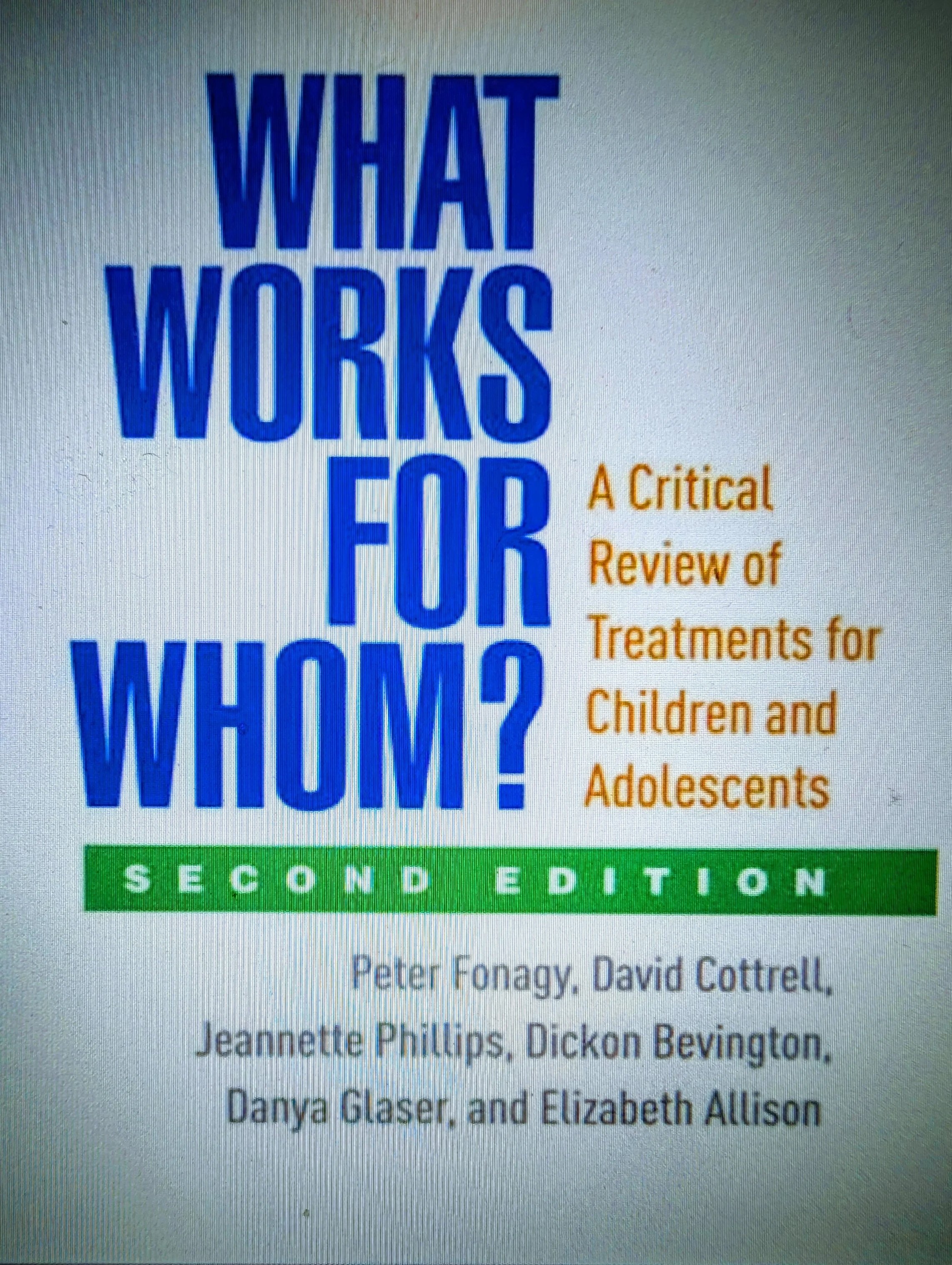
What Works for Whom: a critical appraisal of treatments for children and Adolescents
(2014) Fonagy, P., Phillips, J., Bevington, D., Glaser, D. and Allison, E. (Guilford Publications, 2024) Still described as “the standard reference for the field”. DB was lead author for two brand new chapters (Substance Use Disorders and Self Injurious Behaviour).
The Adolescent Mentalization-based Integrative Treatment (AMBIT) approach to outcome evaluation and manualization: adopting a learning organization approach. (2014) Fuggle P, Bevington D, Cracknell L, et al. Clinical Child Psychology and Psychiatry. 2014;20(3):419-435. doi:10.1177/1359104514521640
E-Therapies Systematic review for Children and Young People with Mental Health Problems (2014) National Collaborating Centre for Mental Health, on behalf of MindEd. Member of Expert Advisory Group. Published by British Psychological Society and Royal College of Psychiatrists, 2014. https://www.minded.org.uk/course/view.php?id=122
Applying attachment theory to effective practice with hard-to-reach youth: the AMBIT approach (2015) Bevington, Fuggle, Fonagy. Attachment and Human Development.
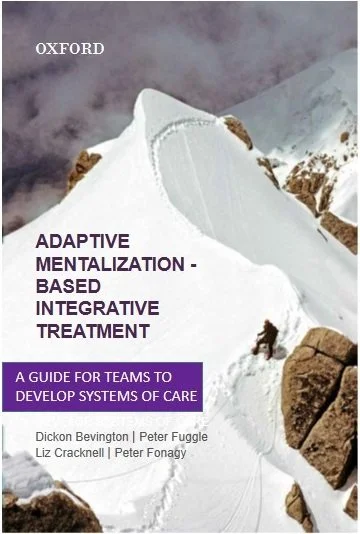
Adaptive Mentalization-Based Integrative Treatment: a guide for teams to develop systems of care
(2017) Bevington, D., Fuggle, P., Fonagy, P., Cracknell , L. (Book, Oxford University Press)
AMBIT: Engaging the Client and Communities of Mind (2019) Bevington D. and Fuggle P., in ‘Handbook of Mentalizing in Mental Health Practice’ (2nd edition). Eds. Bateman A. Fonagy P., APA 2019
Mentalization (2017) Bevington, D. Ch 47 in book: ‘Child Psychology and Psychiatry Frameworks for Clinical Training and Practice’. Eds. Skuse, D., Bruce, H., Dowdney, L. Wiley Blackwell, 2017
A Journey into fatherhood: the art of failing gracefully Ch.1 in “Working with fathers in Psychoanalytic Parent-infant Psychotherapy” Ed. Tessa Baradon, Routledge, 2019
Towards a Learning Stance in Teams Ch. 28 in book: ‘Substance Use and Young People critical Issues’ Eds. Crome, I., and Williams R., Routledge 2020
Improving lives not just saying no to substances: evaluating outcomes for a young people’s substance use team trained in the AMBIT approach. Fuggle, P, Bevington, D., Talbot, L., Wheeler, J., Rees, J., Ventre, E., Beehan, V., Hare, S. (2021) CCCP.
Creating Resilient Systems of Care for Youth Families and Clinicians. Bevington, D., ch. 6 in book “Adolescent Suicide and Self Injury : Mentalizing Theory and Treatment” eds. L. Wiliams and O. Muir. Springer (2020)
Realist Process Evaluation of the implementation and impact of an organisational cultural transformation programme in the Children and Young People's Secure Estate (CYPSE) in England: study protocol. D'Souza S, Lane R, Jacob J, Bevington, D., et al BMJ Open 2021;11:
Characteristics of young people accessing recently implemented Community Forensic Child and Adolescent Mental Health Services (F:CAMHS) in England: insights from national service activity data.” Lane, R., D’Souza, S., Singleton, R. Bevington D., et al.. Eur Child Adolesc Psychiatry (2021).
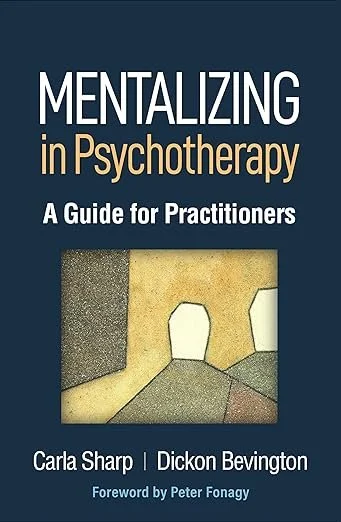
Mentalizing in Psychotherapy: A Guide for Practitioners
Carla Sharp and Dickon Bevington (Book, Guilford Publications/Routledge, 2022)
Kailo: a systemic approach to addressing the social determinants of young people's mental health and wellbeing at the local level. Hobbs T, Santana De Lima E, Bevington D, Preece C, Allen K, Barna P, Berry V, Booker T, Davies K, Davis G, Deighton J, Freeman L, Fuggle P, Goddard E, Greene Barker T, Harris J, Heather A, Jardiel MF, Joshi K, Keenan M, Kennedy L, Malhotra T, March A, Pilling S, Pitt M, Potter K, Rehill N, Shand J, Surtees R, Fonagy P. Wellcome Open Res. 2023 Nov 13;8:524. doi: 10.12688/wellcomeopenres.20095.1. PMID: 38798997; PMCID: PMC11126905.
(Eds. Peter Fuggle, Laura Talbot, Chloe Campbell, Peter Fonagy, and Dickon Bevington (Book, Oxford University Press, 2023)
Meeting You Where You Are: One Mentalizing Stance, and the Many Versions Needed in (Non-)Mentalizing Systems of Help” Bevington D. and Dangerfield M. (2024) Journal of Infant, Child, and Adolescent Psychotherapy, 23(1), 85–95 · Apr 25, 2024
Developing, adapting and disseminating treatments: Using open-source methods and technologies to build capacity in transprofessional and transdiagnostic practices for diverse areas of need. Bevington, D. (2024) Human Systems: Therapy, Culture and Attachments, 4(3), 127-141. https://doi.org/10.1177/26344041241243015
Contact me
Interested in working together? Fill out some info and I will be in touch shortly.